


Spray Foam Homeowner's Guide
Spray Foam Insulation Guide
Spray Polyurethane Foam (SPF) is renown for being a superior material for both insulation and commercial roofing projects, among other applications. SPF is the most robust insulating material on the market today and is frequently utilized to insulate a wide variety of residential, commercial, and industrial buildings.
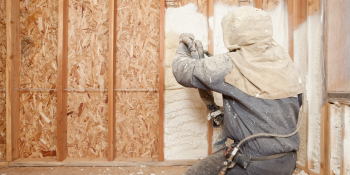
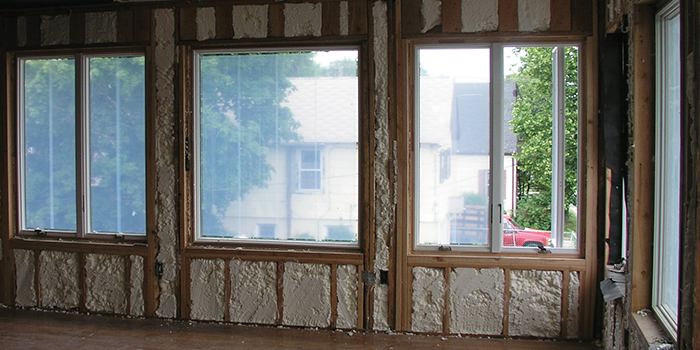
Spray foam can fully insulate a home or building, as well as seal it from air and moisture infiltration, resulting in a more efficient structure with lower energy bills. Spray foam can also strengthen the walls and roof of a home or building, as well as protect it from airborne particulates and mold.
Benefits of Spray Foam Insulation:
- Prevents air and moisture intrusion
- Improves occupant comfort
- Lowers energy bills
- Strengthens the building envelope
- Permanent, sturdy, and does not sag
- Keeps out dust, pollen, and bugs
- Protects against ice dams
- Improves indoor air quality
- Works well with more efficient HVAC equipment
- Meets current building codes
Spray foam can be installed over a wide variety of substrates, including concrete, wood, steel, and most existing roof systems. When it comes to roofing applications, SPF’s versatile adhesive property can translate to savings on roof removal expenses and landfill fees. Applicators can easily install a tapered foam roofing system, which is less expensive than installing other tapered roofing systems. Vertical terminations, protrusions, and mechanical unit risers can easily be spray applied with SPF, which makes them an integral part of the roofing system and minimizes addition material costs.
The Building Science Behind Spray Foam
Spray foam insulation has redefined traditional construction methods to facilitate the energy-efficient green building initiatives of modern building science. Spray foam used in the building envelope outperforms fiberglass insulation. SPF is a superior air barrier that defies traditional, and perhaps outdated, building practices of attic and crawl space ventilation.
More about SPF building science
SPF’s High R-Values
Sprayed polyurethane foam has an aged R-value of approximately 6.0 per 1-inch thickness (depending on the particular formulation and application, higher values have been achieved). This property enables it to provide more thermal resistance with less material than any other type of commercial insulation material.
More about the R-values of spray foam
Spray Foam = Savings
SPF insulation can reduce energy usage and lower utility bills. U.S. Department of Energy (DOE) information reveals that air infiltration contributes to 30% or more of your home’s heating and cooling costs. Air infiltrates homes in the form of drafts through any opening in the building envelope, be it doors, windows, or miscellaneous gaps. Spray foam is used to seal the entire building envelope of your home to prevent air infiltration, so savings of 30% or greater can be achieved when compared to the alternative insulation and roofing systems. The upfront cost of SPF insulation or roofing systems can often be recovered in a matter of years through energy savings alone.
More about energy-efficient homes
Spray Foam Prevents Air and Moisture Infiltration
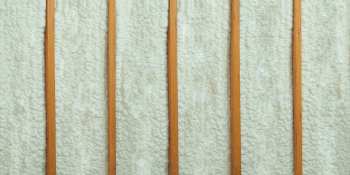
Traditional fiberglass insulation is only stapled or simply placed into the wall cavities and does not seal the stud and wall cavities from end to end, or top to bottom. Air infiltration can easily pass through these gaps, making it far less efficient than spray foam. On the contrary, SPF firmly adheres to the substrate on which it’s installed to create a tight seal and an insulating barrier that stops this air leakage. In addition to being an air barrier, SPF also helps to reduce moisture infiltration, which is a source of dangerous mold and mildew growth, and can also cause structural damage to your home or building.
More about air and vapor barriers
SPF Helps Reduce Moisture and Mold
The presence of mold can cause severe health problems to building occupants. How does mold get in a home? To reproduce, molds produce tiny spores that float through the air. Mold spores can enter a home wherever outside air is coming in, be it an open door or a gap in the building envelope. When mold spores land on a damp spot inside, they may begin growing and digesting whatever they are growing on in order to survive. There are molds that can grow on wood, paper, carpet, and food. When excessive moisture or water accumulates indoors, mold growth will often occur, particularly if the moisture problem remains undiscovered or unaddressed. There is no practical way to completely eliminate mold spores from entering a home, but the way to control indoor mold growth is to control moisture. Thankfully, spray foam functions as an air barrier and a moisture barrier, giving homeowners a valuable tool for maintaining a healthy indoor environment.
Spray Foam Enhances Building Strength
Closed-cell SPF is known for its robust insulation properties, with aged R-values upwards of 7.0 per inch. Those R-values are attainable because of the density of closed-cell foam. Closed-cell foam’s density also has another property: strength. When used for roofing applications, closed-cell foam is strong enough to walk on. When used for insulation, closed-cell foam can strengthen the walls in which it’s installed, preventing them from sheering. Furthermore, when applied to the underside of a roof, closed-cell foam can improve a roof’s resistance to wind uplift during high-wind storms.
SPF Keeps It Quiet
As if it didn’t do enough already, spray foam also has sound-deadening properties. Soft, spongy open-cell foam can prevent sound from traveling between rooms when installed in the interior walls of a home or building. Open-cell foam can also be installed between levels in multi-story homes and high rises to prevent sound from traveling through floors.
Spray Foam: Closed-Cell vs. Open-Cell | Attic Insulation | Ice Dams | Crawl Space Insulation | Potential Mold Issues | Energy Efficient Home Values | Energy Usage | Monolithic Domes